%20(1).webp)




When James Rolt became headteacher at St James' Church of England Primary School four years ago, the school community was at a turning point. Staff morale was low, and the school served one of the most deprived areas within its trust. Today, the school is thriving, staff culture is strong, and pupil outcomes exceed national averages.
At the heart of this transformation is a leadership approach grounded in inclusion—for both pupils and staff—and a belief in collaboration over control.
Reframing inclusion: Every child seen as an individual
The pupil body is remarkably diverse: 64% of pupils are Pupil Premium, with 69% EAL pupils speaking 28 languages from 33 countries. James' first move was to reframe how pupils are understood.
"Rather than categorising into groups, EAL, British Pakistani, refugee, we moved to a personalised approach that fosters authenticity and respectful relationships."
This cultural shift informed everything from the reading spine to collective worship.
"We tore apart our PSHE curriculum and collective worship. We acted things out, made them real, talked about emotions and identity."
Language and representation became key. The school uses inclusive terminology like "enslaved people" and reviews materials to avoid stereotyped portrayals. Books are carefully chosen to reflect pupils' lived experiences. Community voices play an important role: pupils learn from faith leaders, family members, and staff who share personal stories of migration or overcoming barriers.
Inclusion extends to special educational needs. The school's SEN unit (the Hive) is fully integrated into daily life, with pupils moving between the unit and mainstream classes appropriately. This visibility helps younger children develop natural empathy.
Staff have completed unconscious bias and inclusion training, and tailored interventions support children with EAL or SEND using tools like Flash Academy and Read Write Inc alongside bespoke plans.
Inclusion is lived in everyday interactions. Every morning, staff greet children individually by name.
"It's about hearing your name in a positive light," James says. "Every session is a clean slate."
Rebuilding staff culture through collaboration
Parallel to the work on pupil inclusion, James focused on transforming staff culture. His approach was grounded in listening and shared ownership.
Early on, he invited staff to deconstruct and rebuild the curriculum, creating tailored schemes for reading, writing, and foundation subjects.
"We didn't have the budget to buy schemes, so we wrote our own—and then got others to moderate them."
This co-construction gave staff control and purpose while reducing workload. Refinements are made yearly based on teacher feedback.
The school's professional learning includes heatmaps and coaching cycles led by staff themselves. Even teaching assistants have asked to be filmed modelling hinge questions.
"We all get feedback—because we're all here to improve."
James leads by example. He teaches phonics, covers lessons, and sits on the floor with Reception at assemblies.
"You don't ask someone to do something you wouldn't do yourself."
Staff notice this and respond in kind. There's a culture of openness where people feel safe raising concerns. When the office team flagged exhaustion ahead of a summer fair, James moved the date.
Humour and warmth are part of the culture too. "They've made memes of me," James laughs. "You've got to have some fun." But boundaries are clear, staff know he'll stand up to aggressive parents and advocate for the team.
The outcome: A transformed school community
Four years on, the transformation is evident. Staff morale is high, retention is strong, and pupil outcomes exceed national averages. The school that was "at a turning point" is now thriving.
The success stems from a consistent philosophy: inclusion for pupils and staff aren't separate workstreams—they're interconnected. When staff feel valued, heard, and trusted, they create the same culture for children. When pupils see themselves reflected in curriculum and feel known as individuals, they engage and achieve.
"We're not perfect," James reflects, "but our children get a personalised education because our staff know them—and want to make it work."
Key strategies
Creating inclusive culture for pupils:
- Moving from group labels to personalised understanding of each child
- Reviewing curriculum for inclusive language ("enslaved people")
- Choosing books reflecting pupils' lived experiences
- Inviting community voices (faith leaders, families, staff sharing migration stories)
- Fully integrating SEN provision into school life
- Unconscious bias and inclusion training for all staff
- Tailored EAL/SEND interventions (Flash Academy, Read Write Inc, bespoke plans)
- Greeting every child by name every morning ("clean slate")
Building collaborative staff culture:
- Co-constructing curriculum with staff (writing own schemes)
- Staff-led coaching cycles and professional learning
- Leadership visibility—head teaching, covering lessons, modelling practice
- Acting on staff feedback immediately (moving events when exhaustion flagged)
- Creating open-door culture where staff can raise concerns
- Maintaining humour and warmth while setting clear boundaries
- Standing up to aggressive parents on staff's behalf
- "Challenge up" culture where anyone can question decisions
- Celebrating imperfection and continuous improvement
Connecting inclusion and improvement:
- Treating staff as professionals with ownership, not deliverers of mandates
- Reducing workload through sustainable, staff-created solutions
- Tracking both academic and social-emotional progress for pupils
- Building relationships through daily interactions (names, greetings, presence)
- Leading with humanity—humour, visibility, standing alongside team
St James' Church of England Primary School is part of Forward As One Church of England Multi Academy Trust
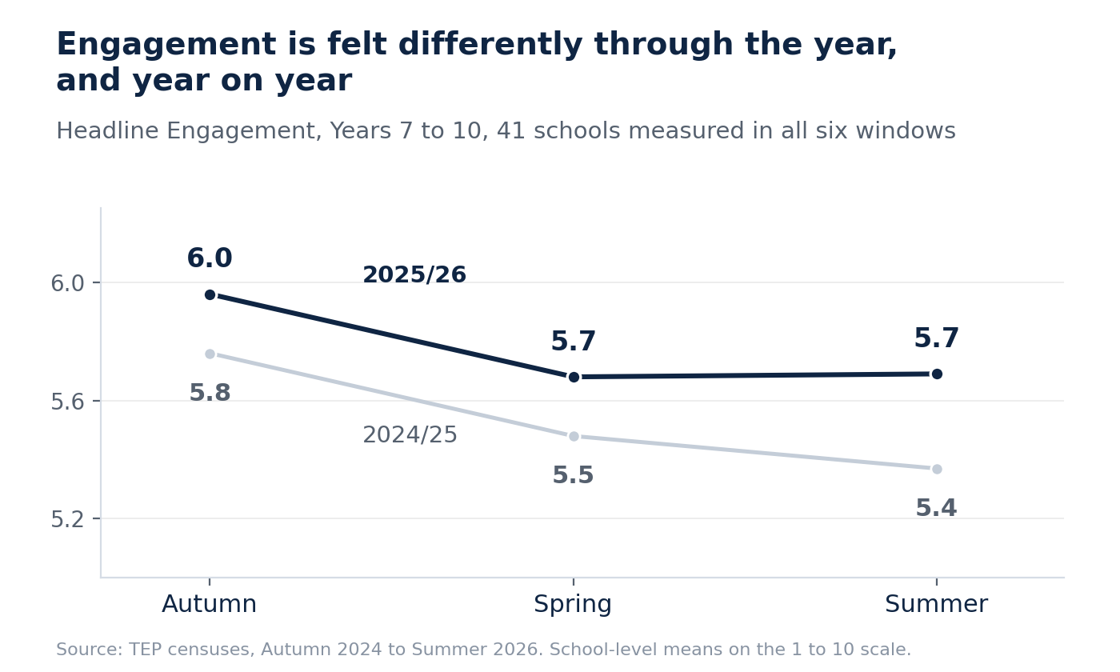
Forward As One Trust began working with TEP to deepen its understanding of engagement across its school communities as part of its commitment to nurturing its 'One Family'. What started as a focus on pupil voice has developed into a broader commitment to listening carefully to both staff and pupils. All Forward As One schools now take part in regular engagement cycles, and the trust values the role this plays in shaping inclusive, responsive, and values-led school environments.