
Why engagement matters
Through national termly data collection, The Engagement Platform (TEP) is contributing to a growing evidence base for engagement as a lead indicator of school outcomes. As engagement is linked to attendance, attainment and retention, measuring it termly means it can be tracked as the year unfolds.
Engagement is the commitment, involvement and emotional investment an individual has in their school. TEP measures engagement through a framework spanning cognitive, emotional, and behavioural engagement, with a set of validated drivers beneath each.

A white paper case study
TEP is a named case study in the DfE white paper Every Child Achieving and Thriving (February 2026), which sets the expectation that every school is monitoring pupil engagement and belonging by 2029.

Validated, published research
Our research is led by Professor John Jerrim of UCL, drawing on national data from pupils and employees across England. Reports are published throughout the year, strengthening the evidence base on engagement.

Measured every term
The same question set completed three times a year, across pupils, employees and families, showing termly variation and a longitudinal picture year-on-year.
Five key findings
Five key findings from The Engagement Platform's (TEP) evidence base, highlighting some of the clearest patterns emerging across pupils and employees.
Engagement drops sharply in year 7
In year 7, engagement falls sharply across the school year, several times more than in any other year group.
More broadly, engagement drifts downwards through primary school. After the sharper fall in year 7, scores do not recover to their previous level, with lower engagement throughout KS4.
The drop happens quickly, with much of the decline between the autumn and spring term.
Research: Mind the Engagement Gap (Jerrim, 2025)
Cited by the Department for Education: Every Child Achieving and Thriving (February 2026)
.png)
When engagement falls, attendance falls
Secondary pupils with the lowest engagement scores are around three times more likely to be persistently absent than pupils with the highest.
The gap remains between pupils in the same school, the same form group, and with similar backgrounds.
For secondary girls, absence is tied more tightly to relationships with other pupils than it is for boys.
Research: Mind the Engagement Gap (Jerrim, 2025) · Gender differences in peer relationships and their link with absences from school (Jerrim, 2026)
Cited by the Department for Education: Every Child Achieving and Thriving (February 2026)
.png)
Pupil agency links to reading progress
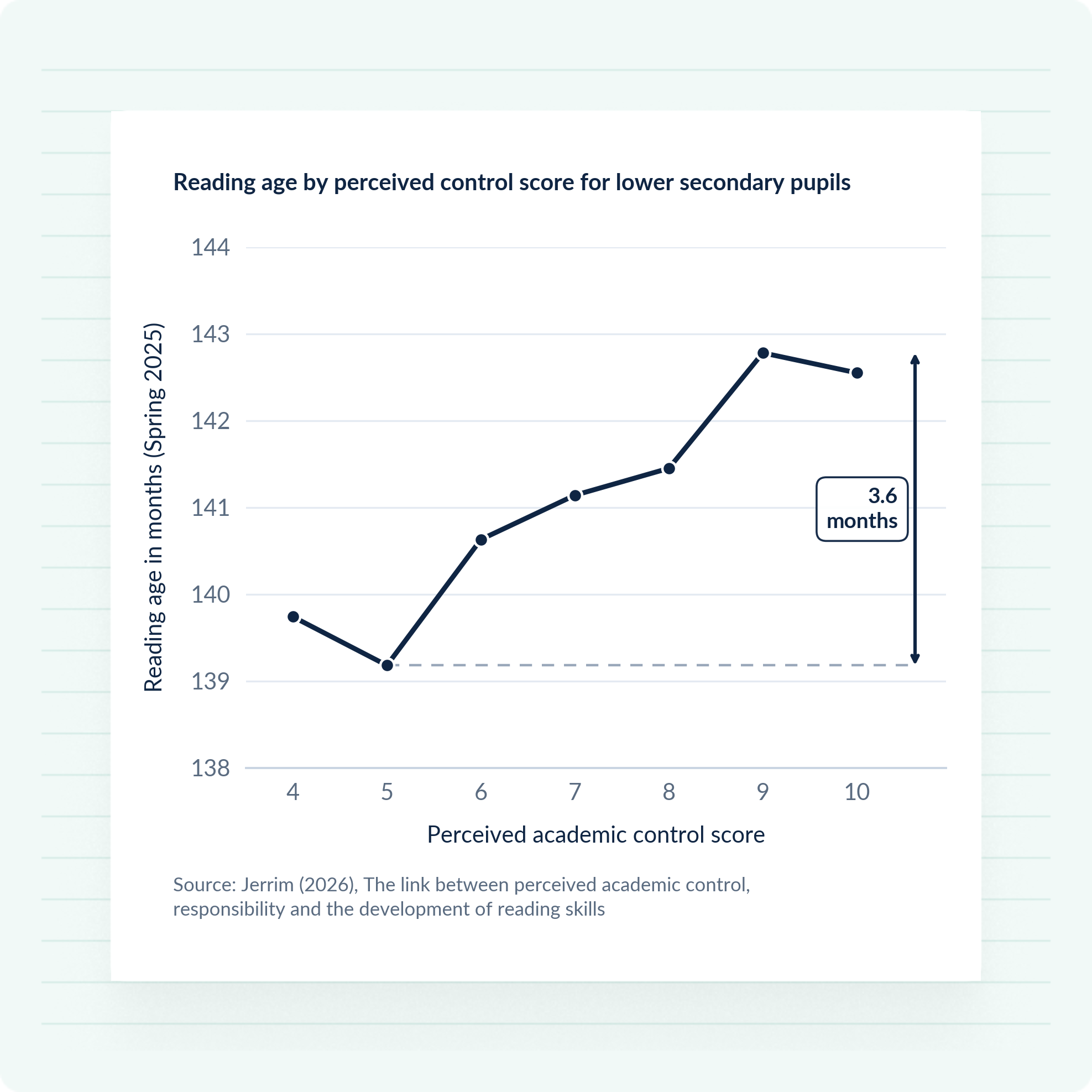
Secondary pupils with a strong sense of agency make around two months' more progress inreading across a single term than pupils without one.
Agency is one of the eleven drivers in TEP's pupil engagement framework. Known in the research as perceived academic control, it is a pupil's belief that their own effort shapes their outcomes: that trying harder leads to better marks.
The link holds after prior attainment, reading age at the start of the year, and pupil background are accounted for.
Research: The link between perceived academic control, responsibility and the development of reading skills (Jerrim, 2026)
Views on leadership are the strongest predictor of retention
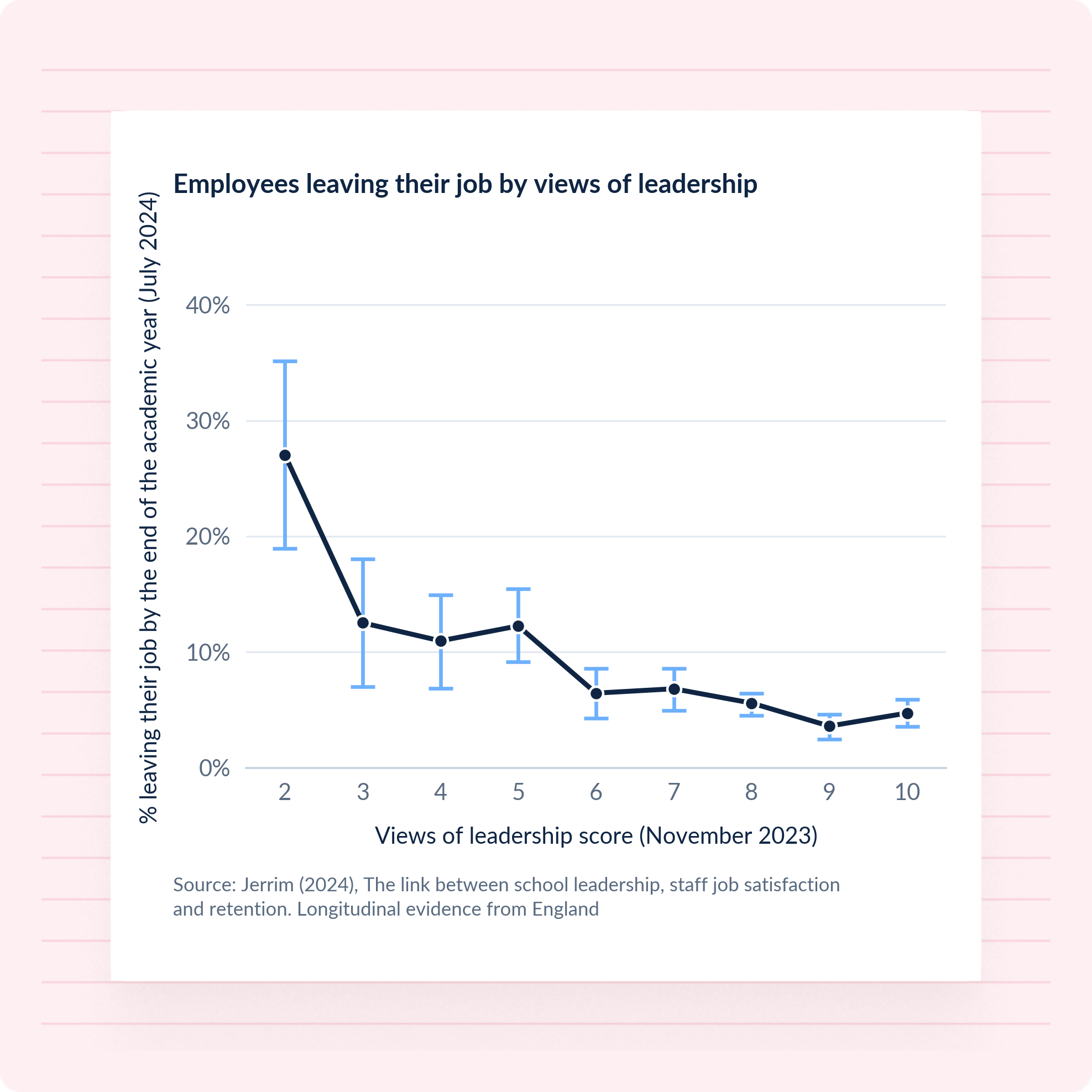
Employees who rate their school's leadership poorly in the autumn are around six times more likely to have left by the end of the academic year.
For employees who rate leadership at six out of ten or above, the likelihood of leaving remains low. However for employees who score below that point, the risk rises sharply.
Leadership is one of ten drivers in TEP's employee engagement framework, measuring employees’ perceptions of leadership, and buy-in to the school’s strategic direction.
This relationship holds among employees working in the same school, in the same role, and once views on pay, resources and their own confidence in the job are accounted for. It holds for teaching assistants and pastoral staff as well as teachers.
Research: The link between school leadership, staff job satisfaction and retention. Longitudinal evidence from England (Jerrim, 2024)
Where employees are engaged, pupils are too
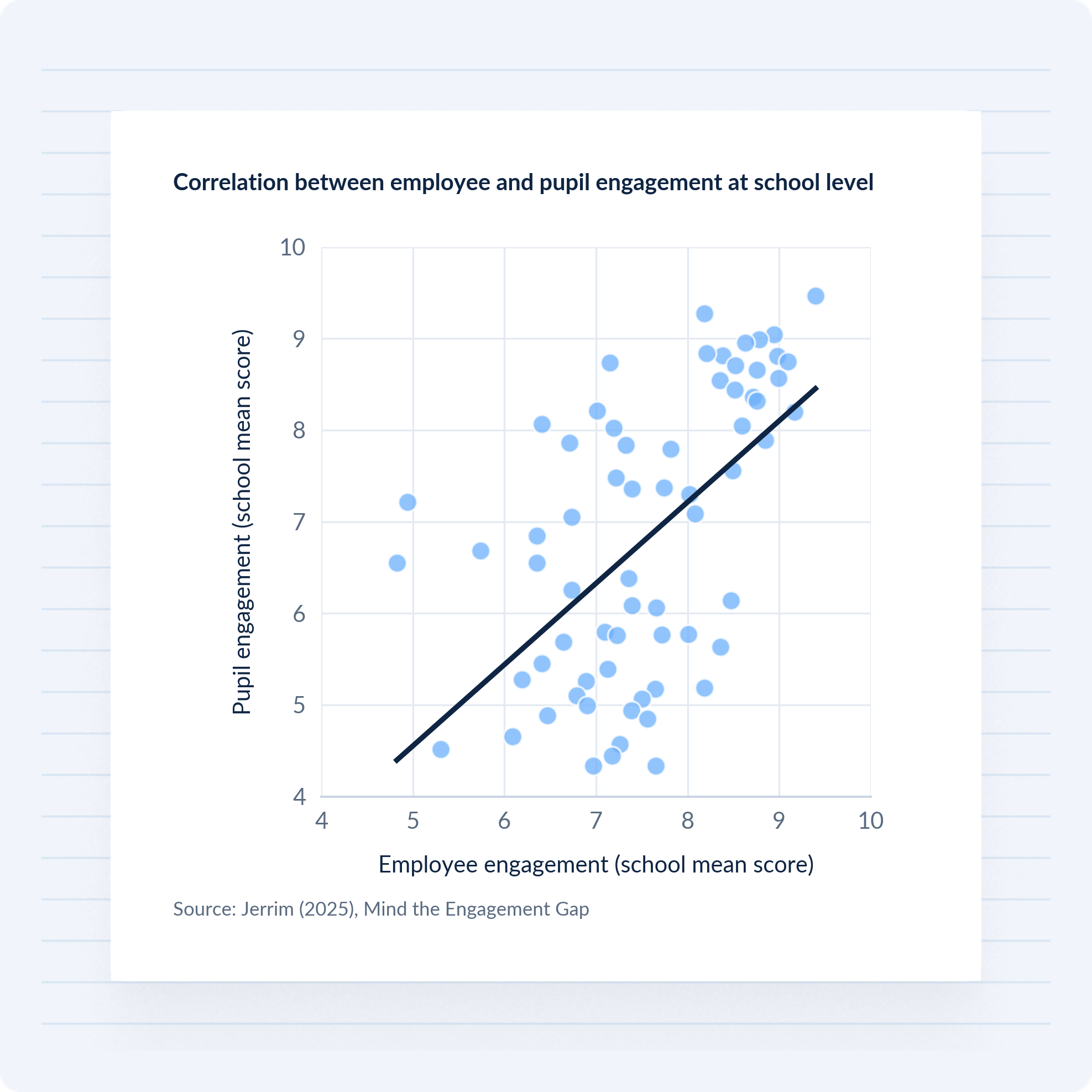
Employee and pupil engagement move together. In schools where employees are more engaged in their work, pupils are more engaged in their learning.
The association is strong, and it holds after accounting for school phase, intake, absence and attainment.
The relationship is correlational rather than causal: more engaged employees may help strengthen pupil engagement, while more engaged pupils may in turn make teaching more rewarding, with the two likely reinforcing one another.
Research: Mind the Engagement Gap (Jerrim, 2025)
Emerging findings
The Engagement Platform's (TEP) webinars explore the latest patterns emerging from each national termly census, and what they suggest about pupil and staff engagement across schools and trusts in England.
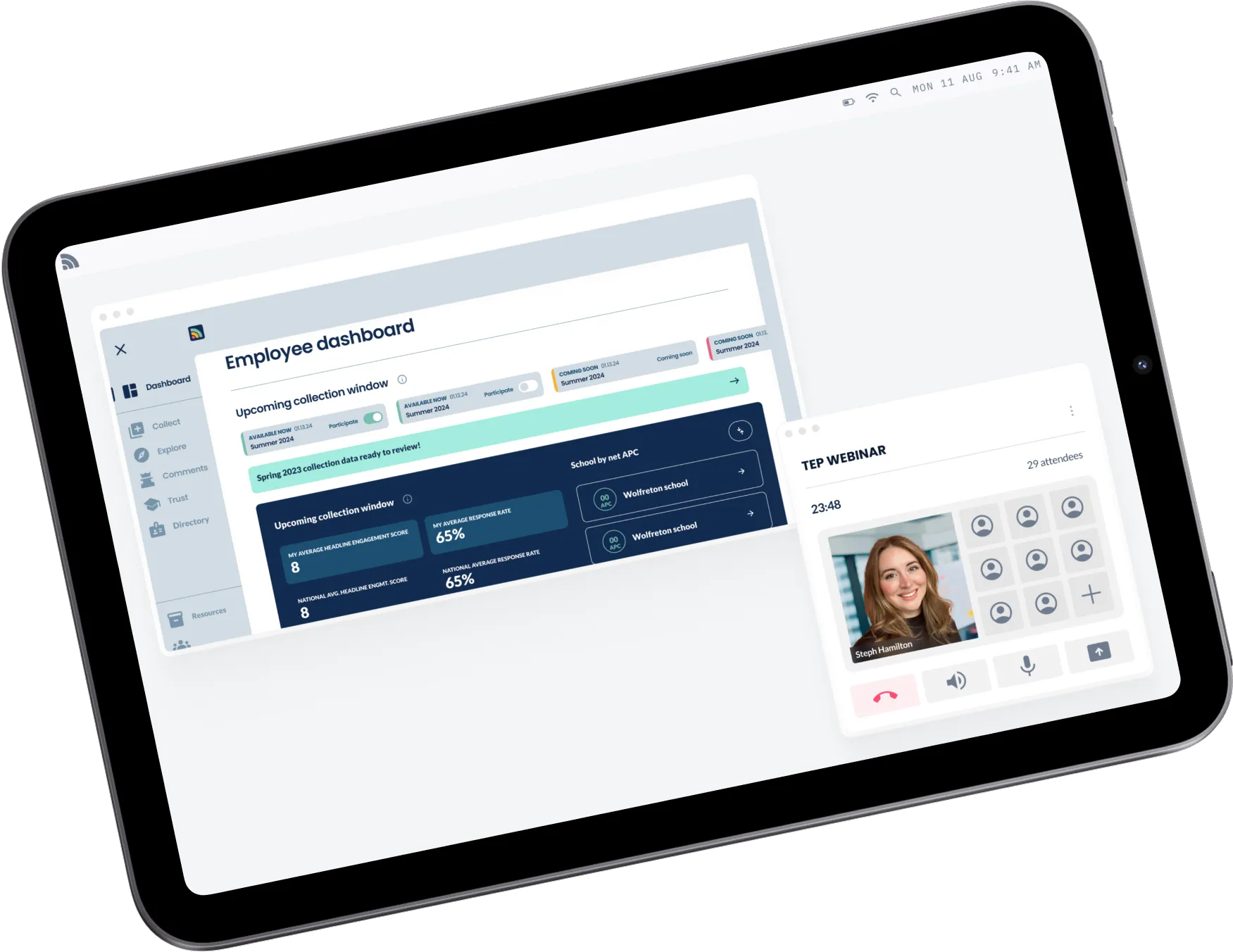
The State of School Engagement in England: Looking ahead to 2027
Sign-up to the webinar to get first sight of the latest findings


Frequently asked questions
The Engagement Platform (TEP) is the leading fixed measurement tool for engagement, designed to help school leaders collect, analyse, and act on insights from pupils, employees, and wider stakeholders
The Engagement Platform (TEP) is the leading fixed measurement tool for engagement, designed to help school leaders collect, analyse, and act on insights from pupils, employees, and wider stakeholders.
The Engagement Platform (TEP) is the leading fixed measurement tool for engagement, designed to help school leaders collect, analyse, and act on insights from pupils, employees, and wider stakeholders.
The Engagement Platform (TEP) is the leading fixed measurement tool for engagement, designed to help school leaders collect, analyse, and act on insights from pupils, employees, and wider stakeholders.
The Engagement Platform (TEP) is the leading fixed measurement tool for engagement, designed to help school leaders collect, analyse, and act on insights from pupils, employees, and wider stakeholders.