





Student engagement: early insights from across-Australia project
Student disengagement is one of the most pressing issues facing Australian schools, as reflected in cross-system challenges with attendance, behaviour and truancy. But issues like absence often follow from warning signs that appear much earlier – in how students feel about school, their relationships, and their motivation to learn.
In 2025, ImpactEd Group and Social Ventures Australia convened an Education Engagement Taskforce designed to address this issue. Bringing together leading researchers and educators from the state, faith and independent sectors, the taskforce aims to build the country’s largest dataset to provide insight into the factors that drive student engagement – and what we can do about it.
The methodology for this project is based on a successful UK research study of over 100,000 students. The UK study, conducted via The Engagement Platform (TEP), highlighted the steep decline in engagement in early secondary school, the profound impact of socio-economic disadvantage on student engagement, and the link of engagement to factors like school attendance. So what are we learning from the first data from an Australian cohort?
The reality of the challenge
Early data from the project suggests some trends that are consistent with the UK. Average school engagement drops from 7.5/10 in primary to 6.5/10 in secondary, with the sharpest decline from Year 4 onwards.
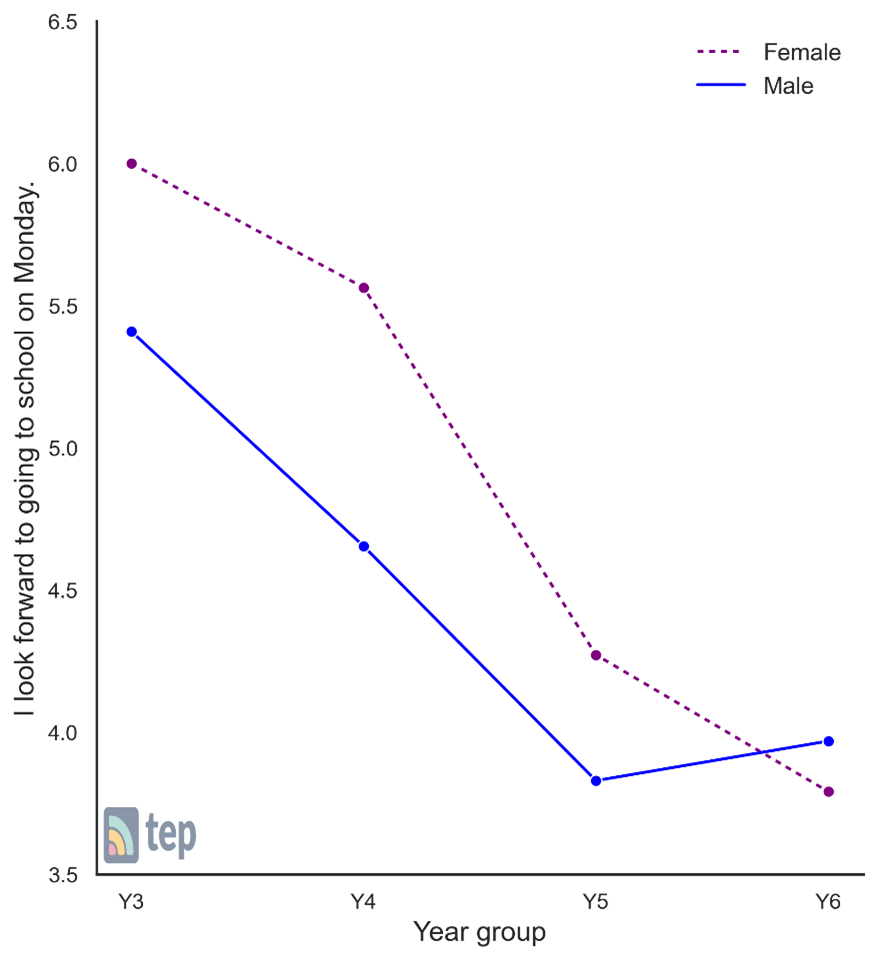
This trend is particularly notable for girls. By Year 6,females were on average two points less likely to say they looked forward to going to school compared to Year 3 (3.9 compared to 6.0). This decline may be linked to relationships with adults at school: 38% of Year 6 girls reported they could not talk to an adult at school if they were worried, compared to just 15% of girls in Year 3. This represents a significant decline during acritical developmental period.
Agency, drive and enjoyment
To understand the drivers behind overall student engagement, the TEP question set surveys students on a range of factors including academic motivation, quality of relationships and classroom behaviour. What emerges from this deeper analysis reveals an intriguing tension in students' experience of school.
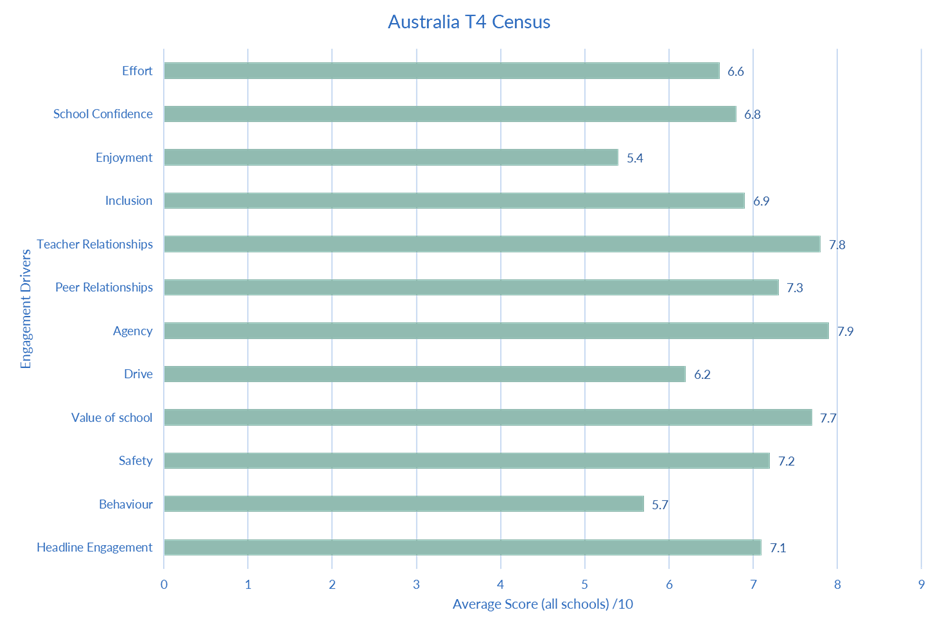
Students reported a relatively high sense of agency at7.9/10, indicating they believe effort leads to success and that studying impacts their marks. They also see clear value in education (7.7/10), strongly endorsing its importance for their future.
Yet despite this belief in both their own capability and the value of school, students scored much lower on their enjoyment of school (5.4), their academic drive and motivation (6.2), and their perception of classroom behaviour (5.7).
This creates a striking puzzle: students have some confidence they can succeed and that school matters – but this isn’t translating to their day-to-day experience and enjoyment. The lower scores on classroom behaviour, combined with the relationship trends highlighted earlier, point to the quality of the school environment and relationships as factors to explore further.
Encouragingly though, students’ strong endorsement of the importance of education for their future provides a foundation to build from - even where their enjoyment and drive are currently lower.
An emerging movement for engagement
The first cohort of schools has been kept deliberately small, and results should be interpreted with caution at this stage based on the current sample of 5,000 students. As the pilot expands and collect further data, we expect to be able to make more certain claims about engagement drivers and how these compare to the UK picture.
One early success has been the applicability of the methodology to the Australian context. Working with our taskforce of Australian leaders, we have taken their input on areas such as the design of the question set, school recruitment, and how to help schools to act on the data. Using the capability of TEP to automate processes wherever possible, an average response rate of 84% - with over half of schools achieving returns over 90% - showed the process to be valuable and manageable.
As we continue to share national data, equally important will be supporting schools to act in their settings. All participating schools receive bespoke reports on their school engagement, allowing them to benchmark results and identify areas of strength or concern. The TEP team provide tailored support to help schools translate those insights into action and are working with the taskforce to build the Australian and international evidence base from the insights of schools on the ground.
To express interest in your school accessing the engagement pilot, please get in touch.