





Why pupils’ belief in their own agency matters for reading
Over the past year, we’ve been working with schools to better understand not just whether pupils are learning, but what shifts first when progress begins to slow.
New research from The Engagement Platform (TEP), conducted in partnership with Outwood Grange Academies Trust and led by Professor John Jerrim at ImpactEd Group, brings one driver into sharp focus: pupils’ belief that their effort can influence outcomes, known as perceived academic control, and its relationship with reading progress.
Belief and reading progress are closely connected
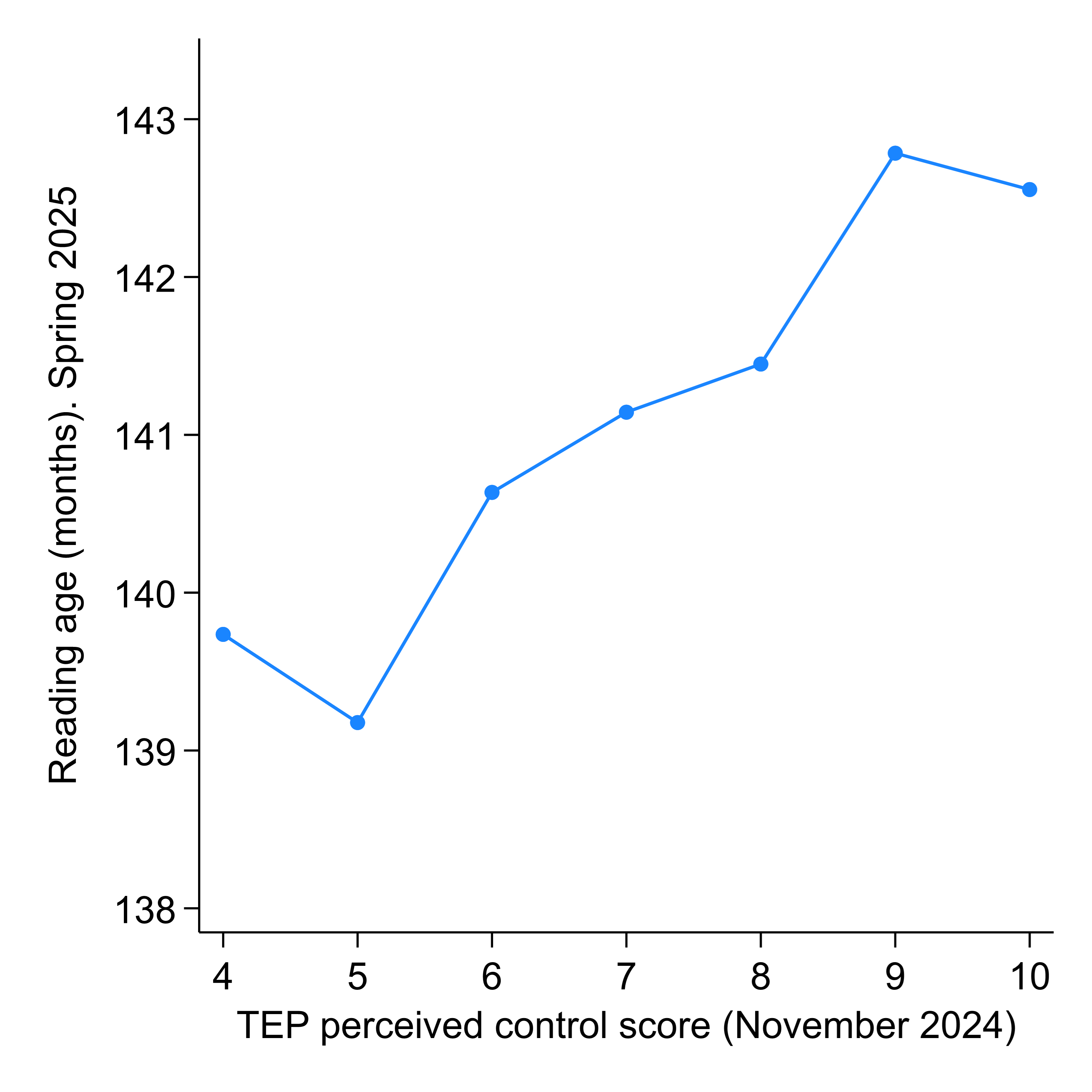
By linking pupil engagement data from TEP with Key Stage 3 reading age assessments, this research followed more than 10,000 pupils across an academic year.
The findings are clear. Pupils who report a strong sense of academic control, believing that effort and strategies lead to success, make significantly more progress in reading than peers who do not.
Pupils with high perceived academic control made around two to three months more progress in reading over just four months than pupils with low levels of control.
In practical terms, this equates to around two to three months additional reading progress over a single term. This relationship holds even after accounting for prior attainment, demographics, and school context. It reinforces an important message: reading progress is shaped not only by curriculum and intervention, but by whether pupils believe their actions can make a difference.
Perceived academic control declines during the school year
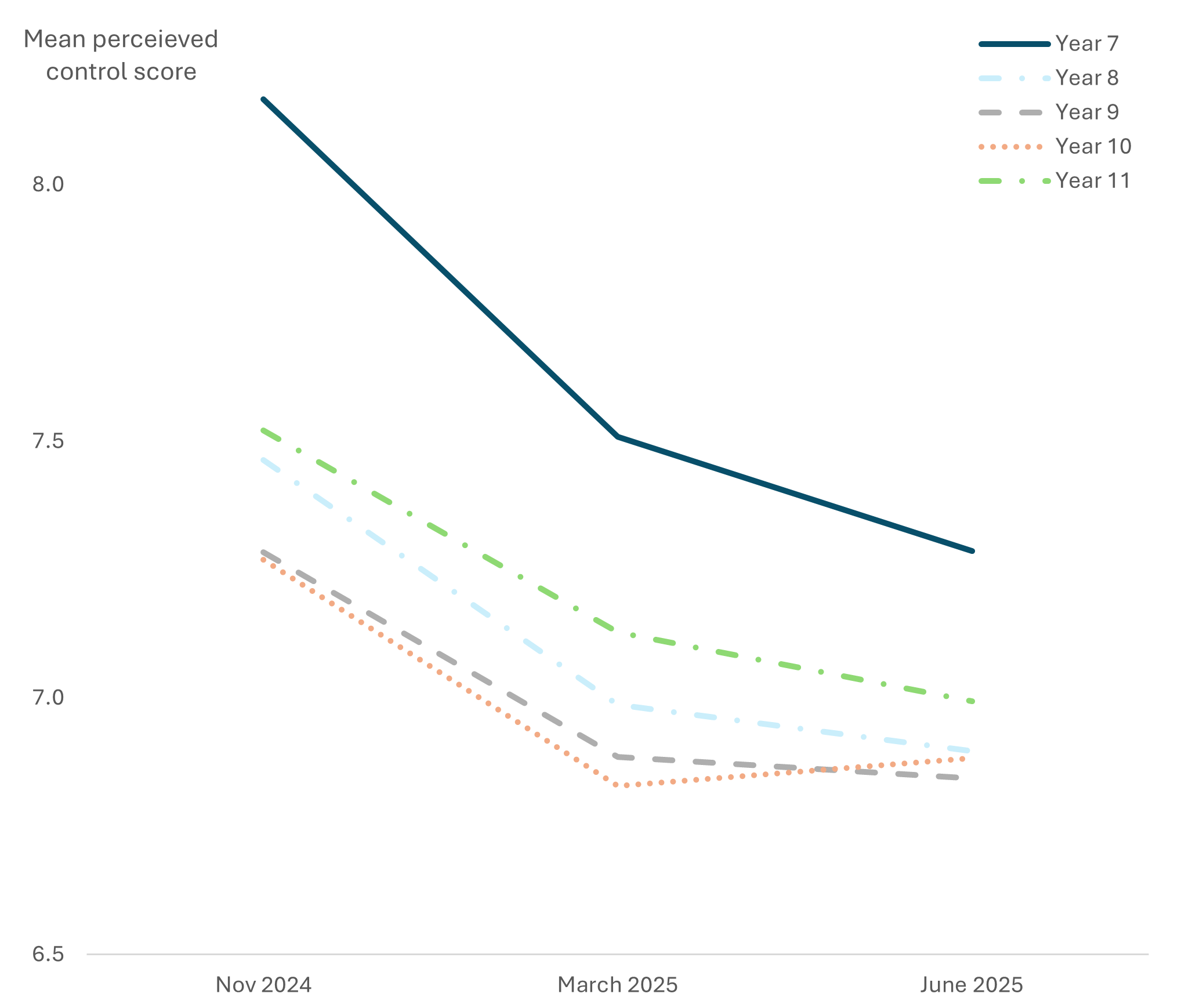
The research also highlights a consistent pattern across secondary schools. Pupils’ perceived academic control declines between the Autumn and Spring terms, with the steepest drop occurring in Year 7, as pupils adjust to secondary school.
By the spring term, around one in five pupils report low levels of control over their academic outcomes - a notable increase from the autumn.
This matters because engagement often shifts before outcomes do. When pupils begin to feel that effort no longer pays off, reading progress is one of the first areas to be affected.
Differences across pupil groups
While the link between perceived academic control and reading progress holds across pupil groups, baseline levels of control are not evenly distributed.
Lower average levels of perceived academic control are seen among:
- Pupils with SEND and EHCPs
- Socio-economically disadvantaged pupils
- White British pupils
- Female pupils
This highlights an important equity issue. Supporting reading outcomes means paying attention not just to what support is offered, but to whether pupils believe that support can help them succeed.
What this means for schools
These findings do not suggest replacing reading interventions. Instead, they underline the importance of strengthening the conditions that allow those interventions to work.
When pupils believe their effort can influence outcomes, they are more likely to persist with challenging texts, apply reading strategies, and continue engaging when learning becomes difficult.
“By interlinking engagement and attainment data, we move beyond simply tracking results. It allows us to identify the root causes of progress, rather than responding to the symptoms of underperformance — and to intervene with greater precision at critical points, such as the transition into Year 7.”— Lee Wilson, CEO, Outwood Grange Academies Trust
Crucially, perceived academic control is not fixed. The data shows it shifts over time, which means schools can influence it. For leaders, this creates an opportunity to use engagement insight alongside attainment data to focus effort, time and resource where it will have the greatest impact.