




This autumn, The Engagement Platform (TEP) joined two KS3 Alliance regional conferences in Yorkshire and the Humber and the East of England, sharing research into pupil engagement during the early secondary years. Drawing on analysis led by Professor John Jerrim at UCL, the sessions explored how engagement changes through Key Stage 3, its relationship with wider school outcomes, and what this means for schools supporting pupils through transition.
Bringing transition into focus
The KS3 Alliance, jointly chaired by Becks Boomer-Clark, CEO of Lift Schools, and Dame Lesley Powell, CEO of North East Learning Trust, brings together schools, trusts and system leaders to strengthen learning, belonging and opportunity in Years 7 to 9.
Becks opened the conferences by highlighting the importance of transition and the need to give the early secondary years greater attention in their own right.
TEP's contribution focused on what our growing national evidence base can tell us about pupils' experiences during this period, drawing on a dataset now covering more than 400,000 pupils across over 800 schools.
What does the data tell us about Key Stage 3?
One of the clearest findings from TEP's research is the substantial decline in pupil engagement during the early secondary years.
While engagement decreases gradually throughout primary school, it falls much more sharply during Year 7 and into Year 8, with much of the Year 7 decline occurring between the autumn and spring terms. Engagement remains comparatively low throughout the rest of secondary education.
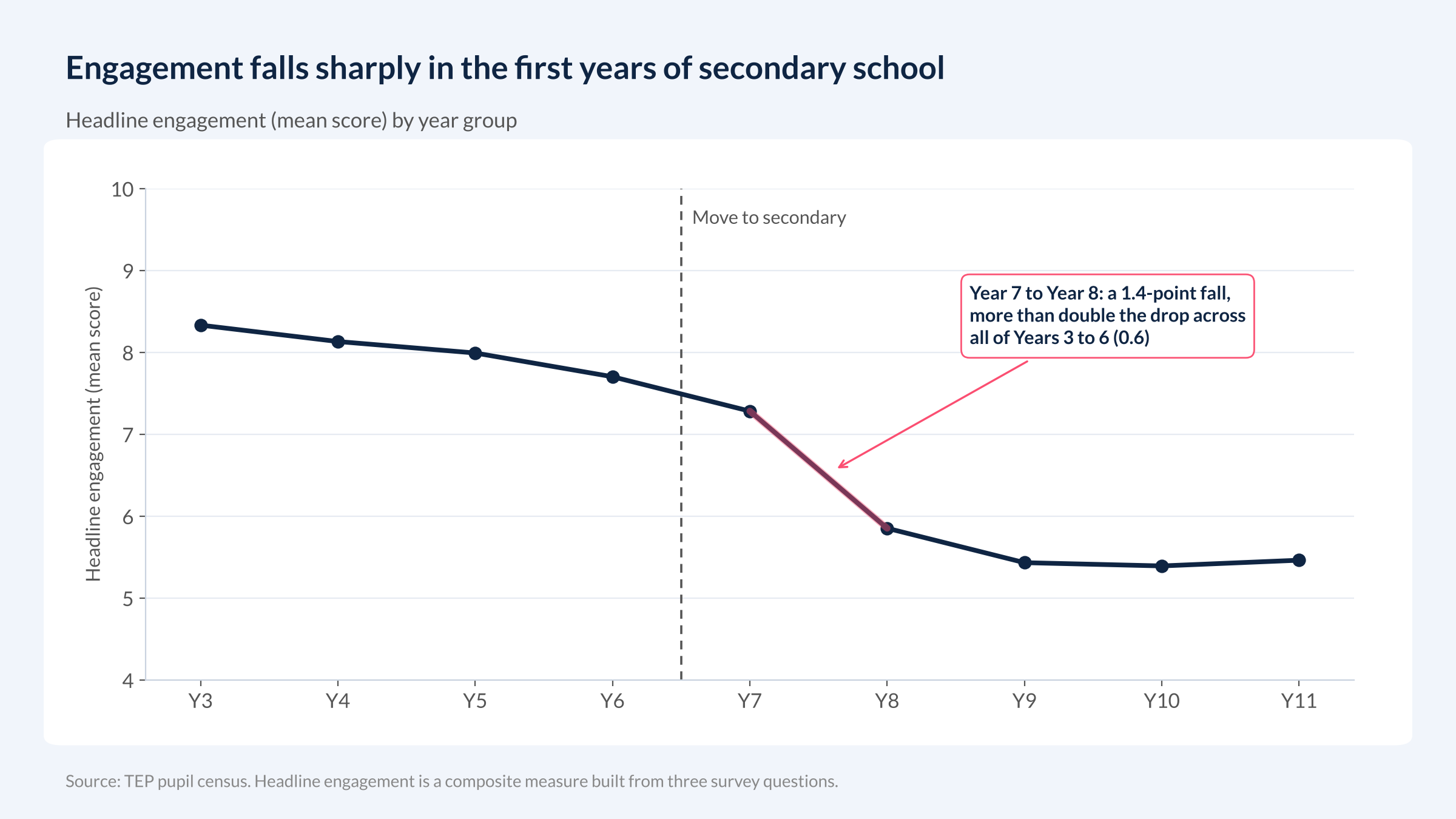
This pattern is remarkably consistent across academic years and regions. Regional analysis shows that, once differences in pupil demographics are accounted for, the trajectory of engagement during transition is remarkably similar across England. Around 90% of the variation in engagement during this period can be explained by demographic differences, rather than regional factors.
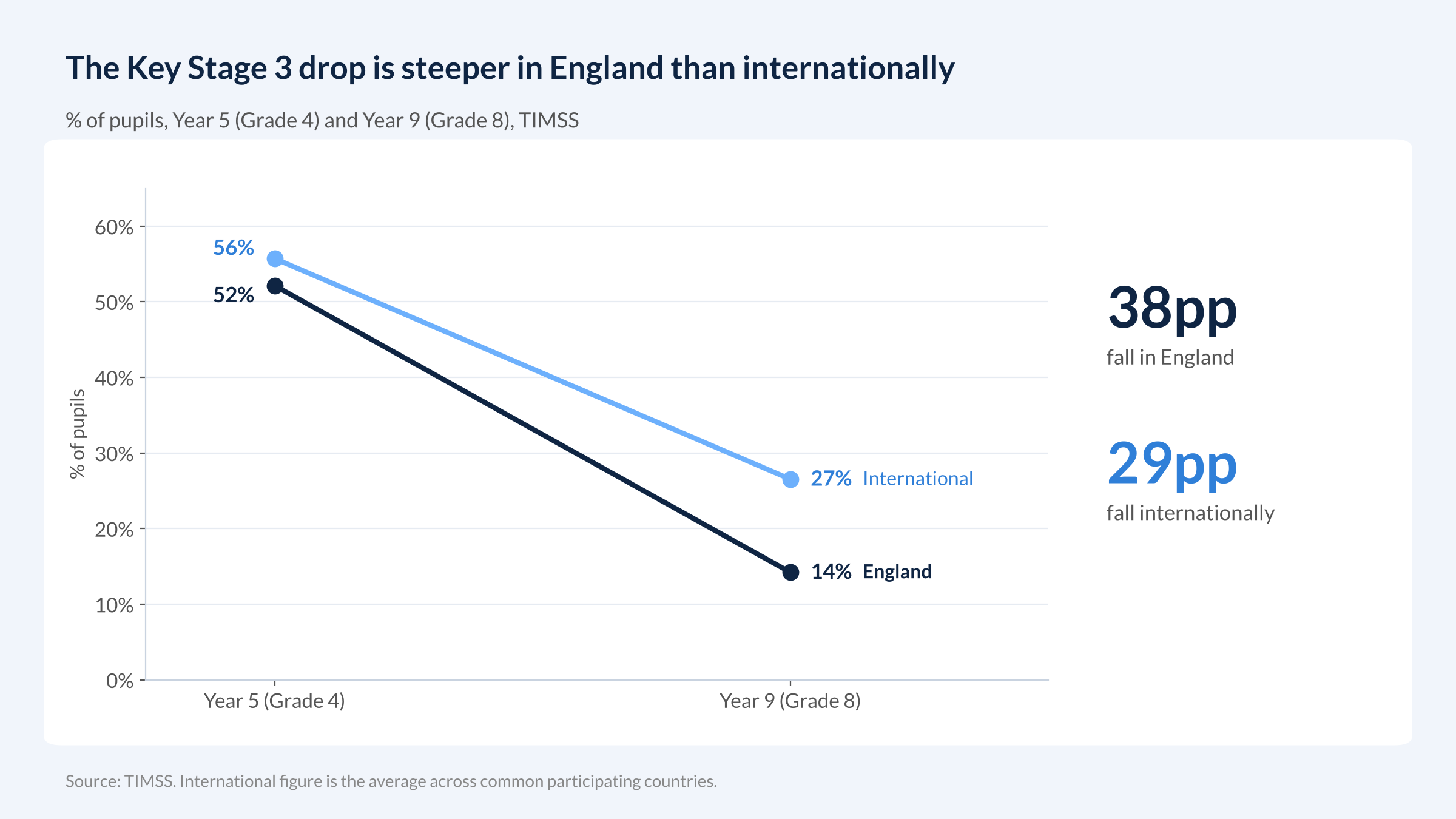
The decline also appears to be about more than pupils simply getting older. Comparing Year 7 and Year 8 pupils of approximately the same age reveals a substantial difference in engagement, while international TIMSS evidence suggests the decline is noticeably sharper in England than elsewhere.
Looking beneath overall engagement reveals further differences. Girls report higher engagement and feel slightly safer than boys in primary school, but both patterns reverse in secondary education. Through Key Stage 3, a gap emerges in girls' perceptions of safety and levels of worry about school.
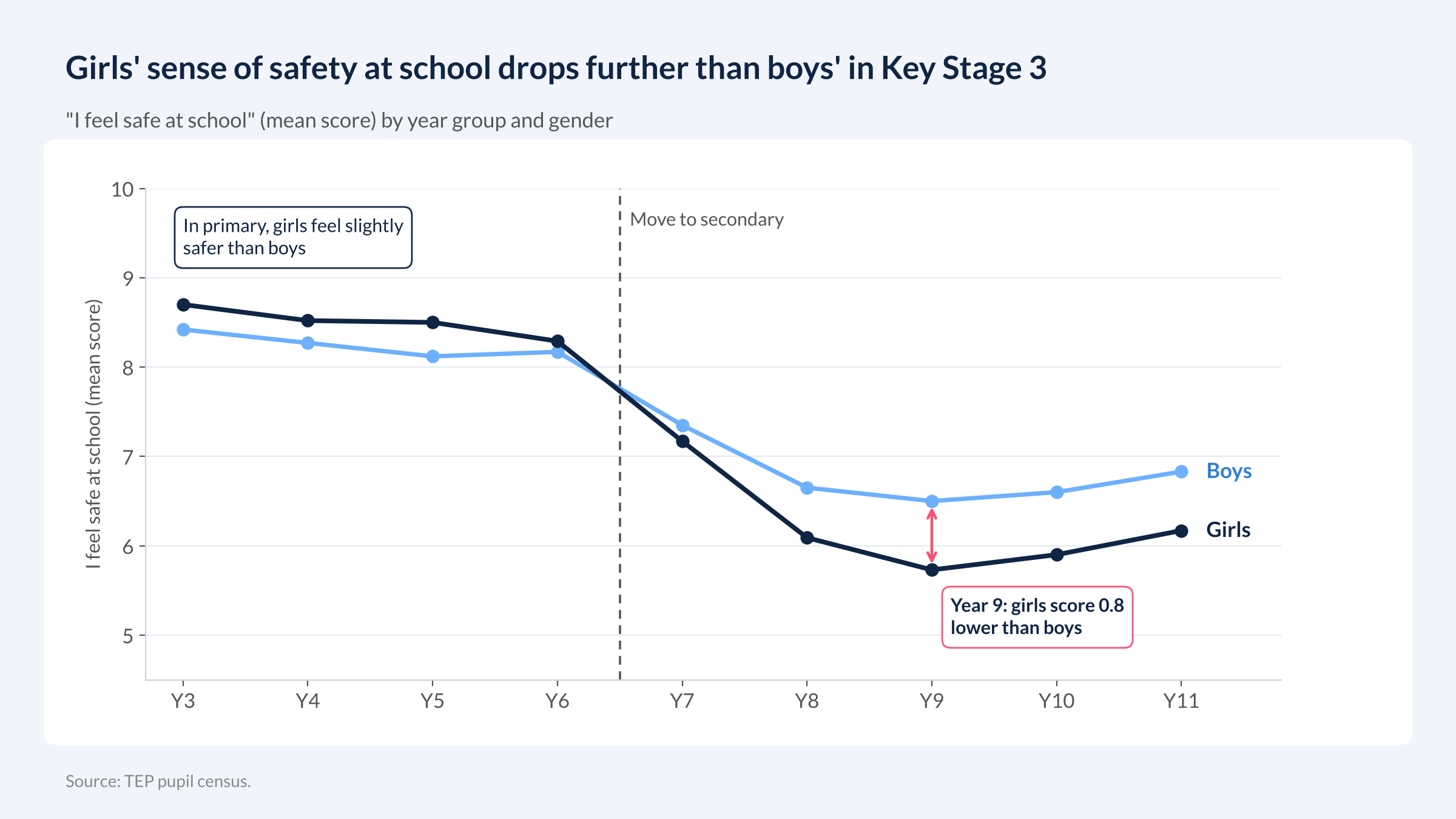
These findings suggest that something about the experience of early secondary education matters, and that understanding the individual factors shaping engagement is particularly important.
Why engagement matters for wider school outcomes
Beyond these overall trends, TEP's research examines how specific measures of engagement relate to pupils' academic progress and wider experiences of school.
Three findings shared during the sessions were particularly relevant:
- Agency and reading progress: Pupils' belief that their effort can influence their academic outcomes declines across the school year, most sharply in Year 7. Research found that pupils reporting higher agency made up to approximately three months more reading progress over a four-month period than otherwise similar peers.
- Effort and attainment: Higher self-reported effort in Year 7 is associated with approximately half a GCSE grade equivalent of additional progress in Maths and English. For pupils in the highest quarter of prior attainment, this relationship is particularly strong, equivalent to approximately one full GCSE grade in both subjects.
- Peer relationships and school moves: Pupils reporting very poor peer relationships were approximately twice as likely to leave their school over the following year compared with those reporting very strong relationships (10% compared with 5%), even after accounting for pupil characteristics, attendance and other engagement measures.
While these findings establish associations rather than causation, they demonstrate the value of understanding engagement beyond a single overall measure. Pupils' academic confidence, effort and relationships each offer important insight into their experiences and subsequent outcomes.
What does this mean for schools and trusts?
The findings reinforce the importance of treating transition as an ongoing process, rather than an event at the beginning of Year 7.
Much of the decline in engagement happens during pupils' first two terms of secondary education, making this a particularly important period for schools to understand how pupils are settling in.
Measuring engagement in the autumn and again in the spring can help leaders identify which aspects of pupils' experiences are changing, for whom, and where a more targeted response may be valuable.
Importantly, these are areas that schools can seek to influence. Understanding changes in pupils' sense of agency, relationships or perceptions of safety provides opportunities to respond to emerging challenges, alongside existing measures of attendance, attainment and behaviour.
There is also more to learn. This year, TEP's research will explore how engagement varies for pupils with SEND, whether transition is easier when pupils move with more children they already know, and differences in engagement across school subjects.
All of TEP's published research is open access and available on our research publications page.
Thank you
Our thanks go to Outwood Grange Academies Trust and Dixons Academies Trust in Yorkshire and the Humber, and CAM Academies Trust and Inspiration Academies Trust in the East of England, for hosting the conferences and inviting TEP to contribute.
Thank you also to Lift Schools and North East Learning Trust for their national leadership of the KS3 Alliance, and to everyone who joined the sessions and contributed to the discussions. It was encouraging to see such a collective focus on strengthening pupils' experiences during the early secondary years.
If you are organising a regional event, conference or school leadership network and would like TEP to share our research, you can book us for an event.